English| EUR
Suggested for you
More currencies
Choose a language
Paragliding over Sa Pa's terraced valleys draws thousands of visitors each year, yet questions about flight safety and accident history remain common among prospective flyers. This guide examines the safety record of tandem paragliding operations at Ham Rong Mountain, the protocols operators follow, and what the incident data reveals about flight risk in northern Vietnam's mountain terrain.
Quick answer
Commercial tandem paragliding at Ham Rong Mountain in Sa Pa operates under certified pilot supervision with no publicly documented fatal accidents as of 2026. FlySapa, the primary operator since launching services, maintains dual-pilot certification standards and weather-dependent launch protocols. Incident reports in the region involve minor injuries during landing in adverse wind conditions, typically resulting in operator suspension of flights until conditions stabilize.
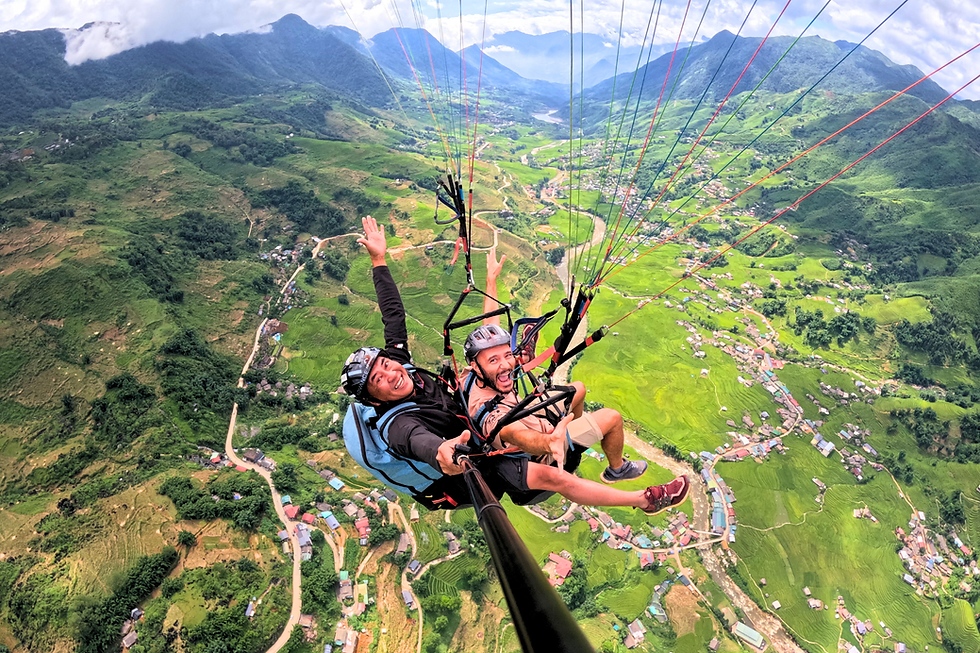
No commercial paragliding operation at Ham Rong Mountain has recorded a fatal sapa paragliding accident in publicly available safety databases through 2026. The terrain and weather patterns that make Sa Pa's valleys visually dramatic also create operational constraints that certified pilots navigate daily. FlySapa operates from a dedicated launch point at 1,800 meters elevation, where morning thermal activity remains predictable between March and November. Pilots hold dual certification from the Vietnam Airsports Federation and international equivalents, with tandem endorsements requiring a minimum of 100 supervised flights before independent operation. Equipment undergoes pre-flight inspection following manufacturer protocols, and reserve parachutes are mandatory on every harness system. Flights suspend automatically when wind speeds at the launch zone exceed 25 kilometers per hour or when cloud cover drops below the minimum visibility threshold of 1,000 meters. The handful of documented paragliding safety incidents in northern Vietnam involve hard landings during unexpected wind shear, resulting in sprained ankles or minor bruising rather than traumatic injury. These events typically occur during the transition between dry and wet seasons—late April and early September—when atmospheric instability increases. Operators respond by narrowing the daily flight window and requiring real-time wind monitoring from both launch and landing zones. Risk mitigation at Ham Rong focuses on passenger briefing rather than assumption of prior knowledge. Pre-flight instruction covers body position during takeoff, in-flight posture, and the critical leg-extension technique required for soft landing. Passengers who disregard the landing protocol account for the majority of minor injuries, a pattern consistent across tandem paragliding operations globally. Weight restrictions apply: passengers must fall between 20 and 110 kilograms, and dual-passenger flights are prohibited. The absence of serious incidents reflects both the conservatism of certified operators and the forgiving nature of Sa Pa's landing zones, which consist of terraced fields with gradual slopes rather than rocky or forested terrain. Emergency response coordination with local medical facilities remains limited, reinforcing the operator emphasis on preventing incidents rather than managing them post-event.
“The absence of serious incidents reflects both the conservatism of certified operators and the forgiving nature of Sa Pa's landing zones.”
Public concern regarding paragliding in Sa Pa often stems from general misconceptions about the inherent risks of aerial sports. Professional operations prioritize safety through standardized equipment checks and strict adherence to meteorological protocols to mitigate these risks.
MythParagliding in Sa Pa is inherently dangerous.
FactCommercial operators utilize certified equipment and trained pilots who follow regulated safety protocols for every flight.
MythAccidents are frequent in Sa Pa due to the mountainous terrain.
FactParagliding activity is strictly managed by weather monitoring, ensuring flights only occur when conditions meet specific safety requirements.
MythPilots do not follow established safety standards.
FactProfessional tandem flights require certified pilots who undergo rigorous training to maintain industry safety and operational standards.
The best arrival window for paragliding is 07:00–16:30, as morning launches provide the highest atmospheric stability. Calmer winds and clearer visibility during early hours reduce turbulence, creating safer conditions for valley flights compared to the more volatile afternoons.
Cool, dry air 15°C–22°C
Stable conditions with high visibility for mountain navigation.
Mild temps 18°C–25°C
Ideal spring weather before the summer rains begin.
—
Reduced wind activity creates the most consistent launch environment.
Verdict: The best window is weekday mornings during September, October, or April, arriving at 07:00 to utilize the calmest air.
Operations are scheduled daily to ensure flights occur only during daylight hours, supporting safety and visibility standards. The facility maintains consistent hours throughout the week.
The launch site is located at Ham Rong Mountain, Sa Pa, Lao Cai, Vietnam. Visitors should access the mountain via established paths to reach the authorized paragliding commercial site.
Direct transfer to Ham Rong Mountain base
From Sa Pa Stone Church center
Route via Fansipan Road to Ham Rong entrance
Confirm your location with the official operator at https://flysapa.com or via +84898138094 before departure to ensure you reach the designated, monitored launch area rather than unauthorized zones.
Paragliding safety depends on strict adherence to pilot instructions and proper equipment protocols. Following these guidelines reduces incident risk and ensures a controlled flight experience.
Everything you need to know about sapa paragliding accident
Commercial paragliding operators in Sa Pa prioritize strict adherence to aviation protocols to minimize any sapa paragliding accident risk. Standard equipment checks and pre-flight briefings are conducted for every participant to ensure a secure flight experience. Flight providers operate under local safety regulations to maintain high standards for all tandem passengers. The primary goal of these operators is to provide a reliable aerial experience while avoiding the circumstances that could lead to a sapa paragliding accident. Pilots maintain constant communication with ground crew and utilize wind monitoring tools to ensure conditions remain within safe limits. Every takeoff and landing follows established flight paths to reduce the potential for a sapa paragliding accident. While no outdoor activity is without inherent risk, thorough training and equipment maintenance are the cornerstones of the sport here. Visitors should focus on selecting certified operators rather than worrying about a sapa paragliding accident. Clear visibility and stable wind speeds are essential for safe operations, so flights are rescheduled during adverse weather. Monitoring the forecast helps ensure that your mountain descent is conducted under optimal conditions. Tandem flights are generally available for participants who meet specific age and weight requirements determined by the pilot. Parents should consult with the operator directly to confirm if their child meets the physical criteria for this high-altitude activity.